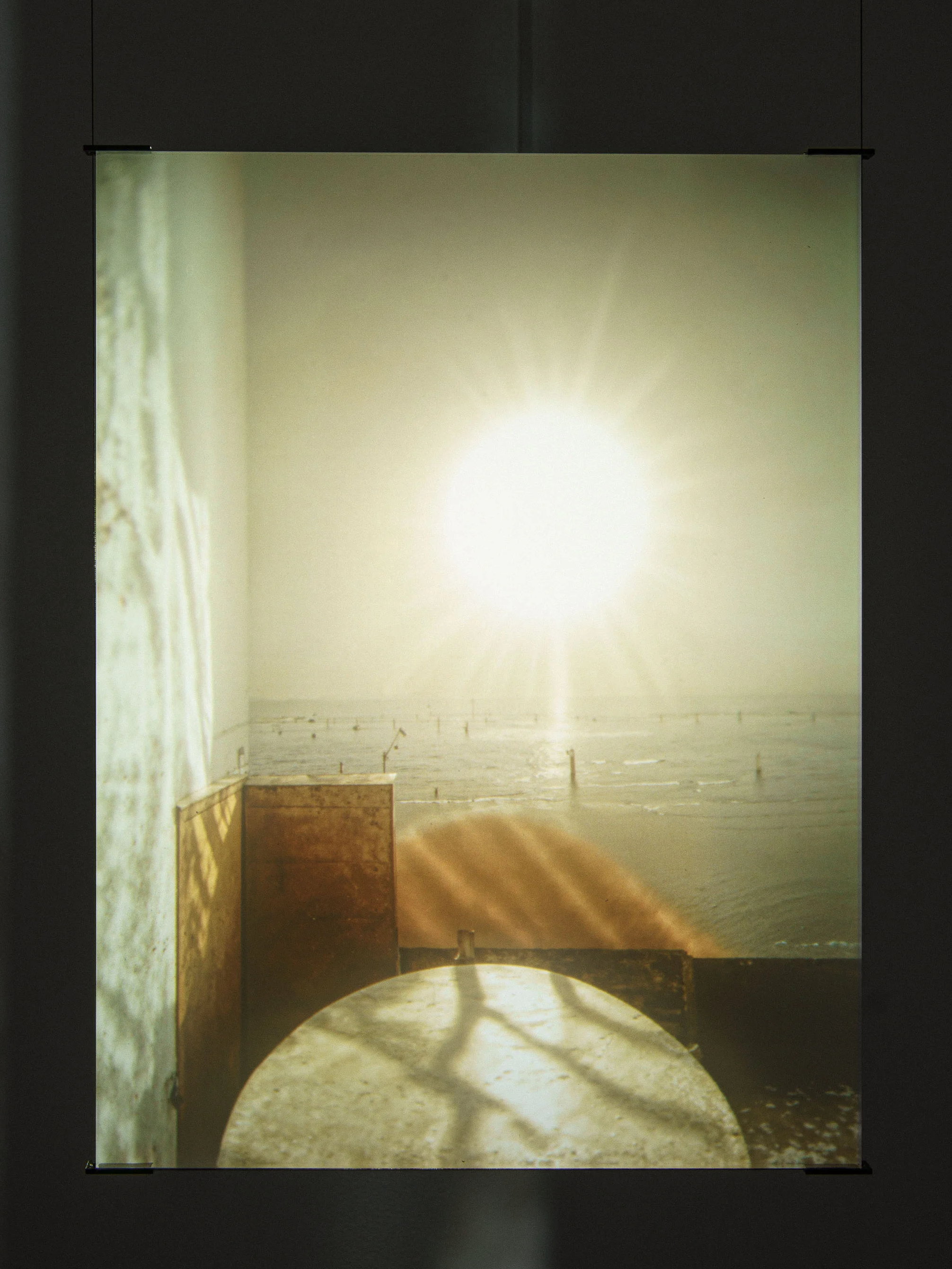
bright sun
Photographing after AI
01The Concept
In 2022, the text-to-image revolution introduced language as image-design data. For the first time in photography's history, the caption precedes the image: the word becomes the image's origin rather than its explanation. Les Murmures is a sustained artistic investigation of this inversion: what happens when a photographer speaks to their camera and alters the image at the moment of capture?
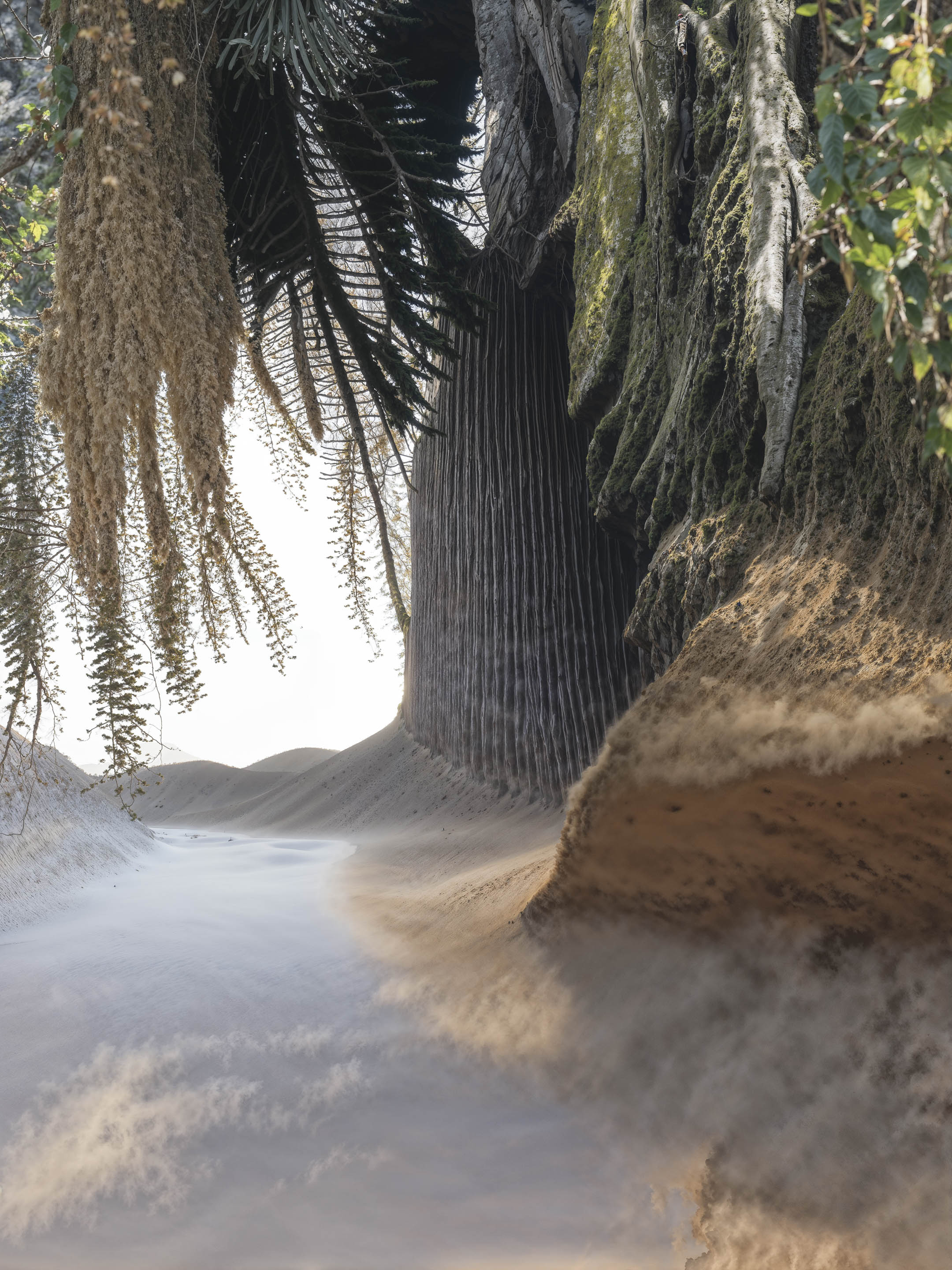
"images falling apart
like sand castles"
The project does not position AI as a neutral tool or a spectacular subject. Instead, it treats the relationship between photographer and generative system as a fragile, imperfect collaboration, one grounded in misunderstanding, poetic drift, and the productive accident. Language enters the photographic act not as description or injunction, but as the projection of desire.
Everything runs locally. No cloud. No network. No server. The entire generative AI pipeline lives inside the camera itself.
Three elements constitute the work: an innovative AI camera built from scratch; a photographic series made with it; and an original, protean audiovisual documentation of the creative process: the whispers left for the machine, synthetic videos and speeches, an overloaded timeline...
02The Device
In collaboration with mouvement.studio
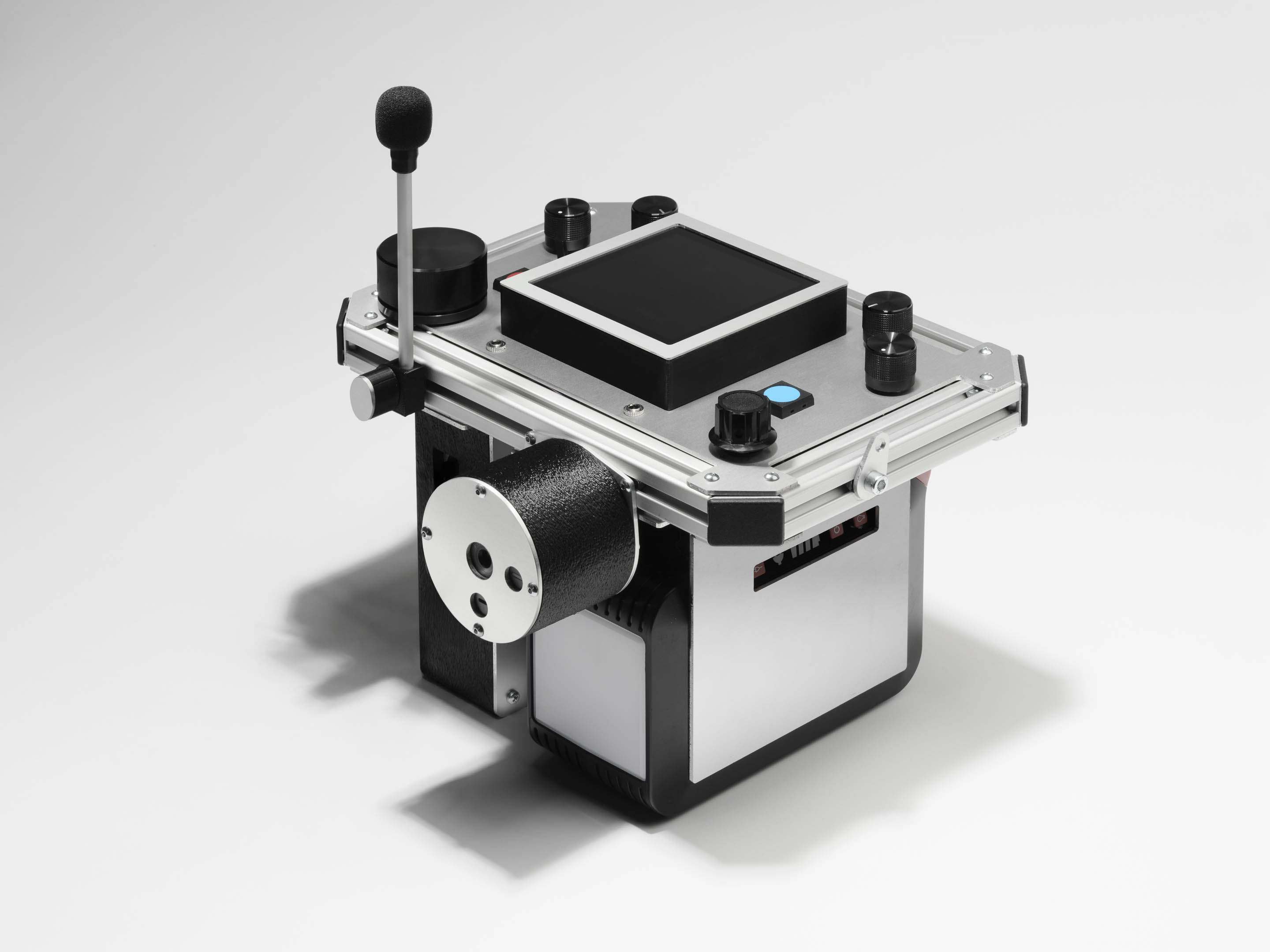
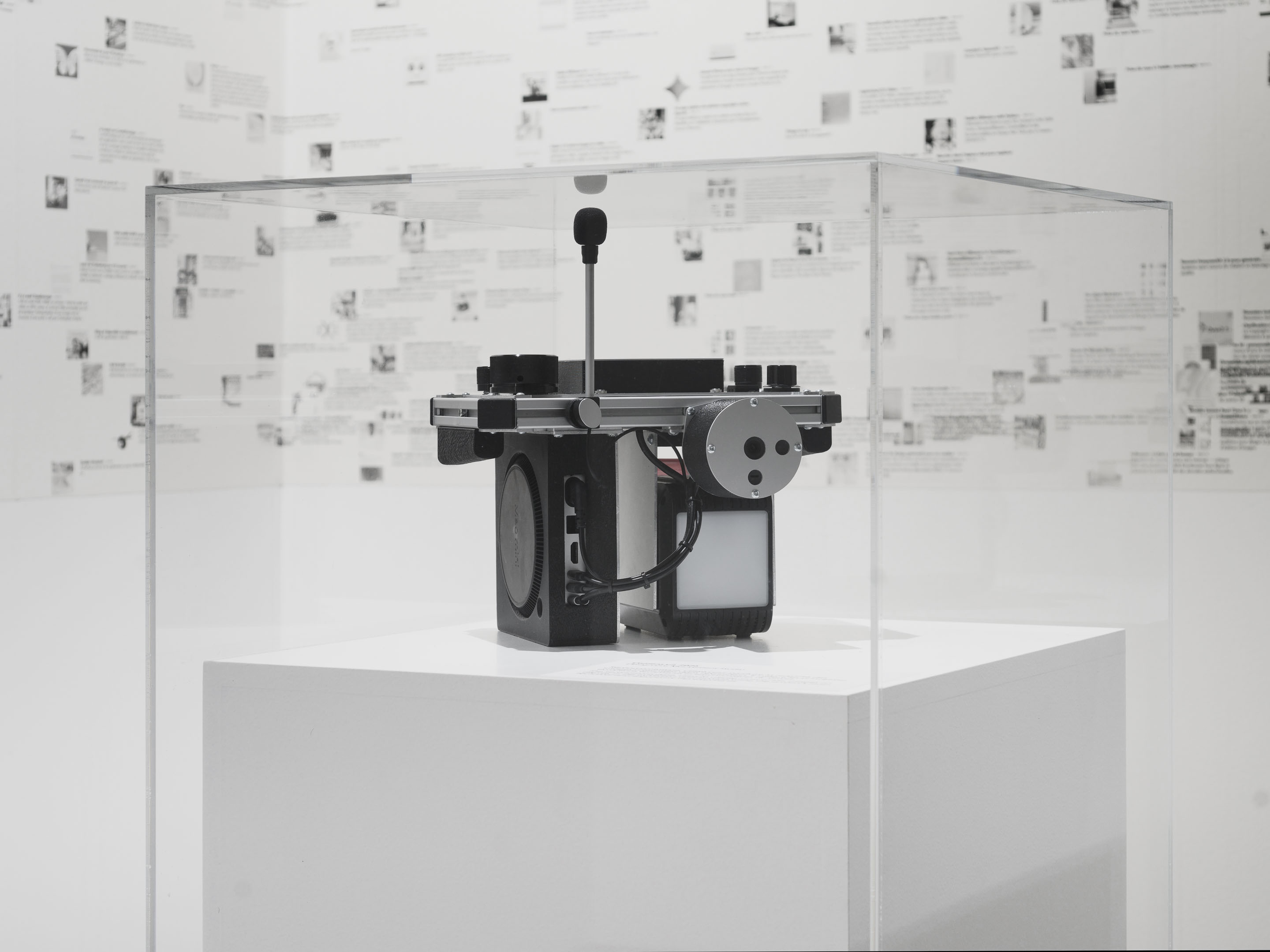
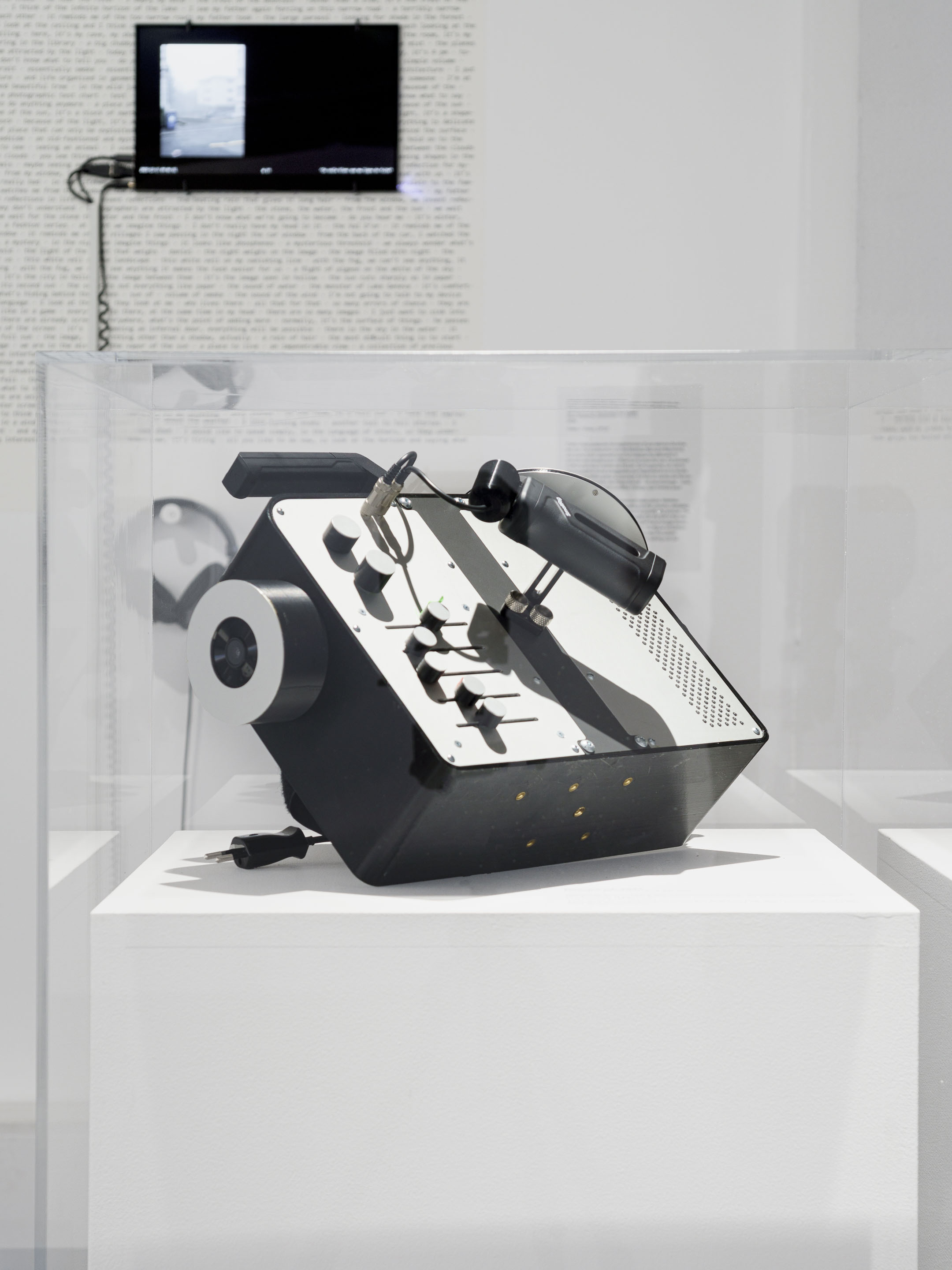
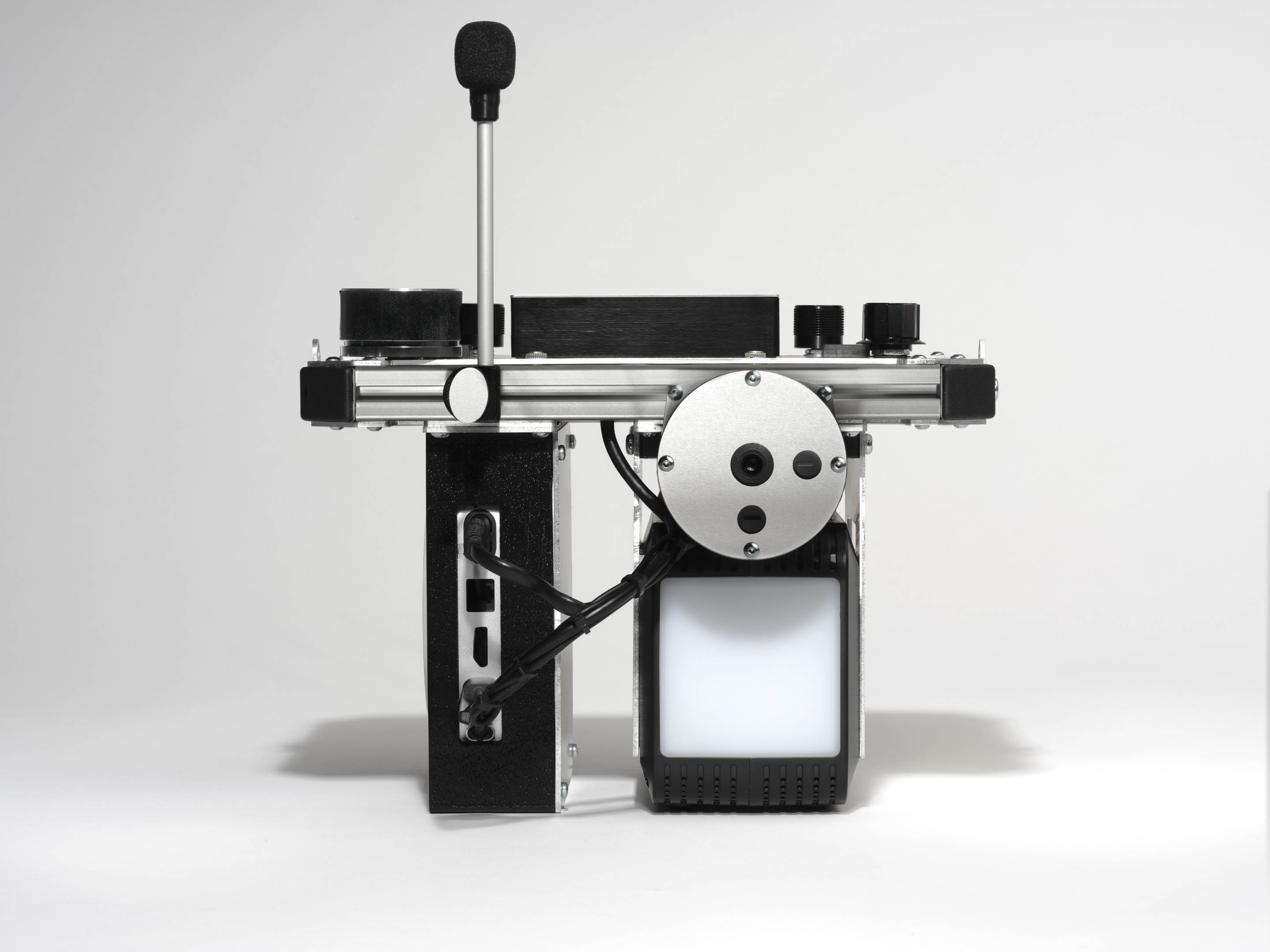
Les Murmures needed a physical object: an AI camera designed and built from scratch. The device runs entirely offline, no cloud, no network. It has two buttons: one records a murmur, capturing the photographer's spoken words; one triggers the shutter, producing an image altered by what was said. Each photograph is a deliberate act: observe, frame, murmur, shoot.
Instrument Parameters
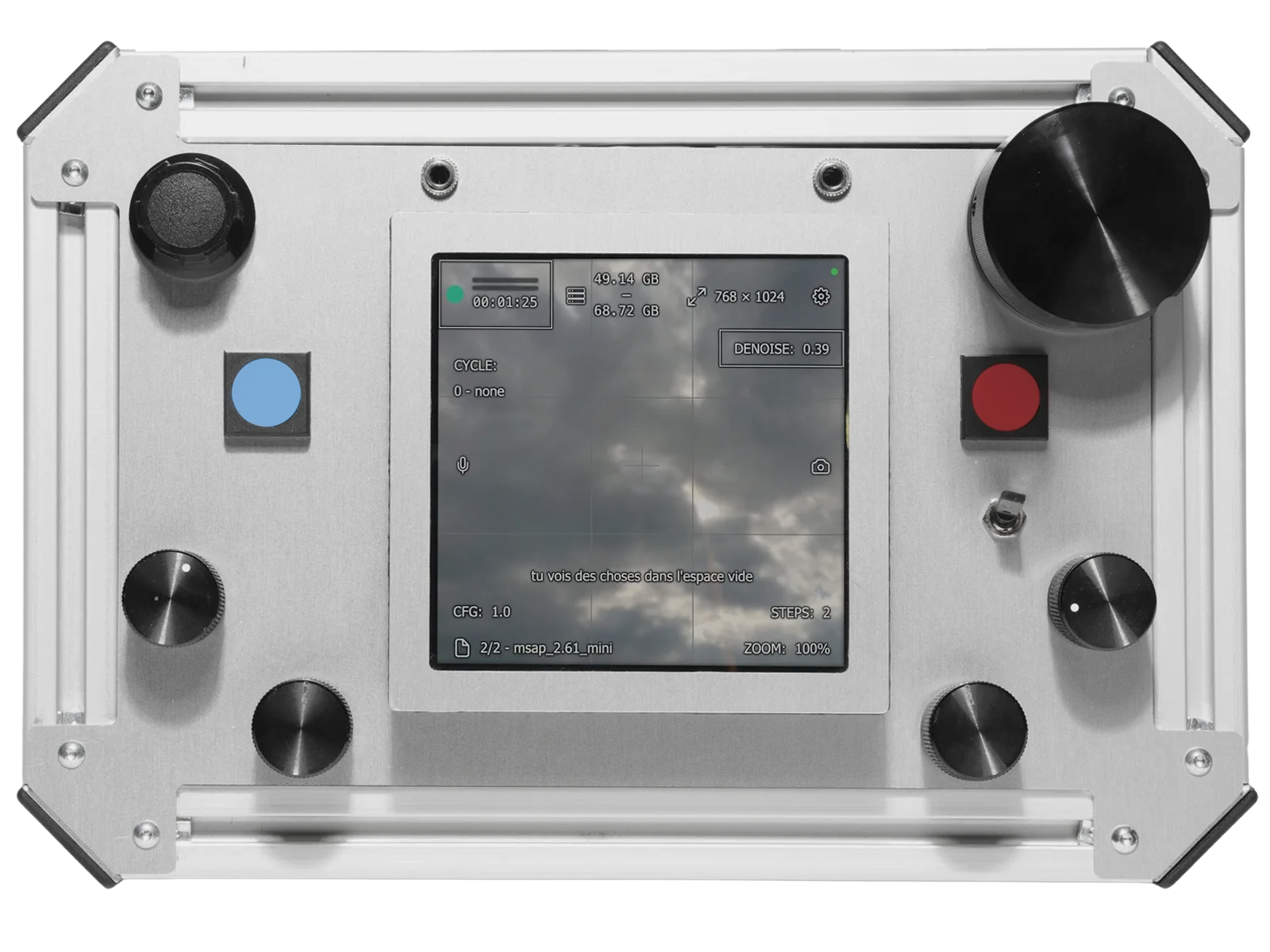
Controls
Top-right to top-left, clockwise
The camera's interface has been reimagined poetically: traditional parameters (shutter speed, aperture, depth of field, exposure modes) are replaced with equivalents drawn from spoken language and atmospheric description. The aesthetic draws on early photographic apparatus, and the uncanny object-ness of technology that feels simultaneously ancient and impossible. Not a consumer product. Not a prototype. A strange creature.
The transformation
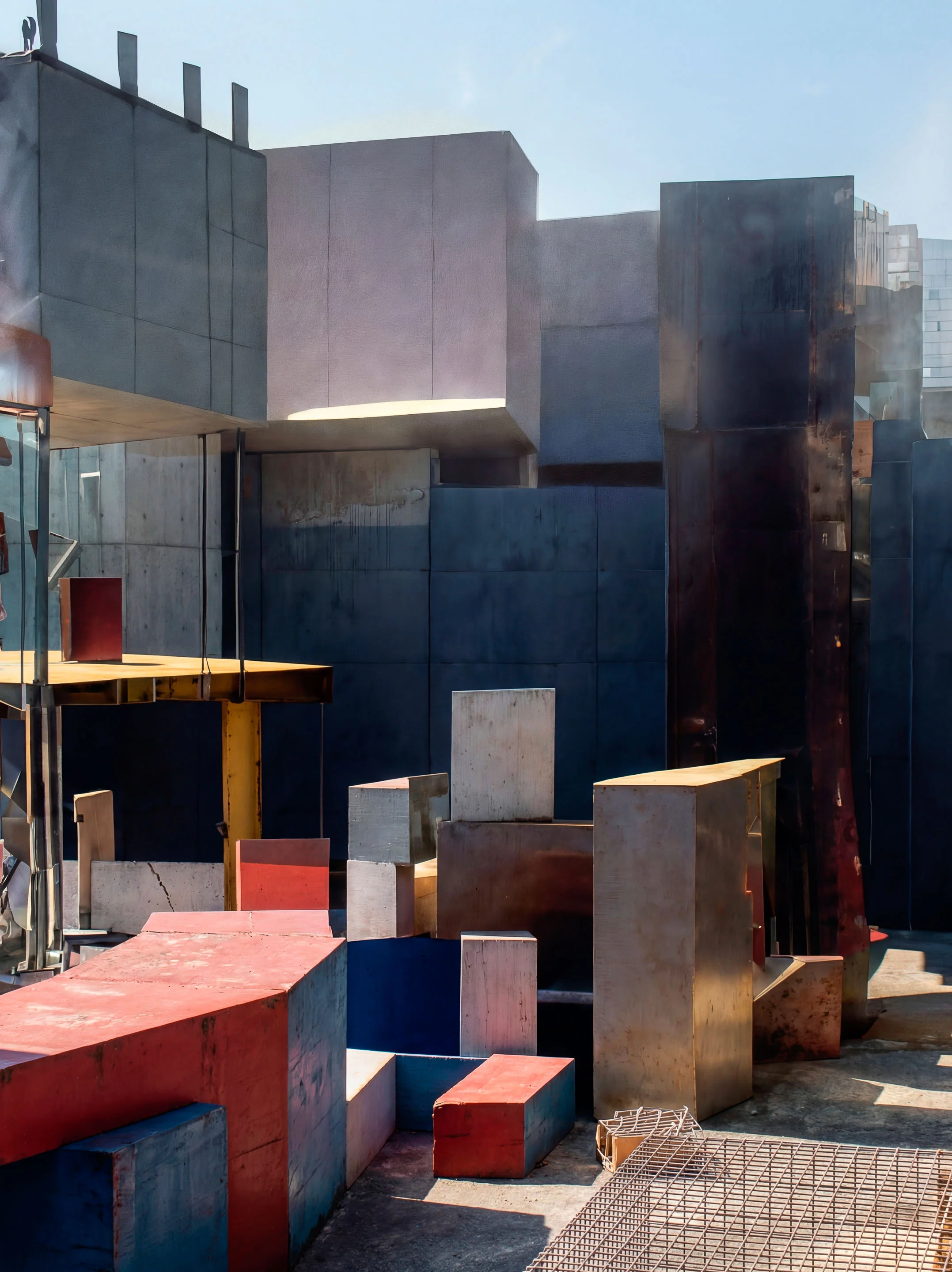
"life arranged in geometric shapes"
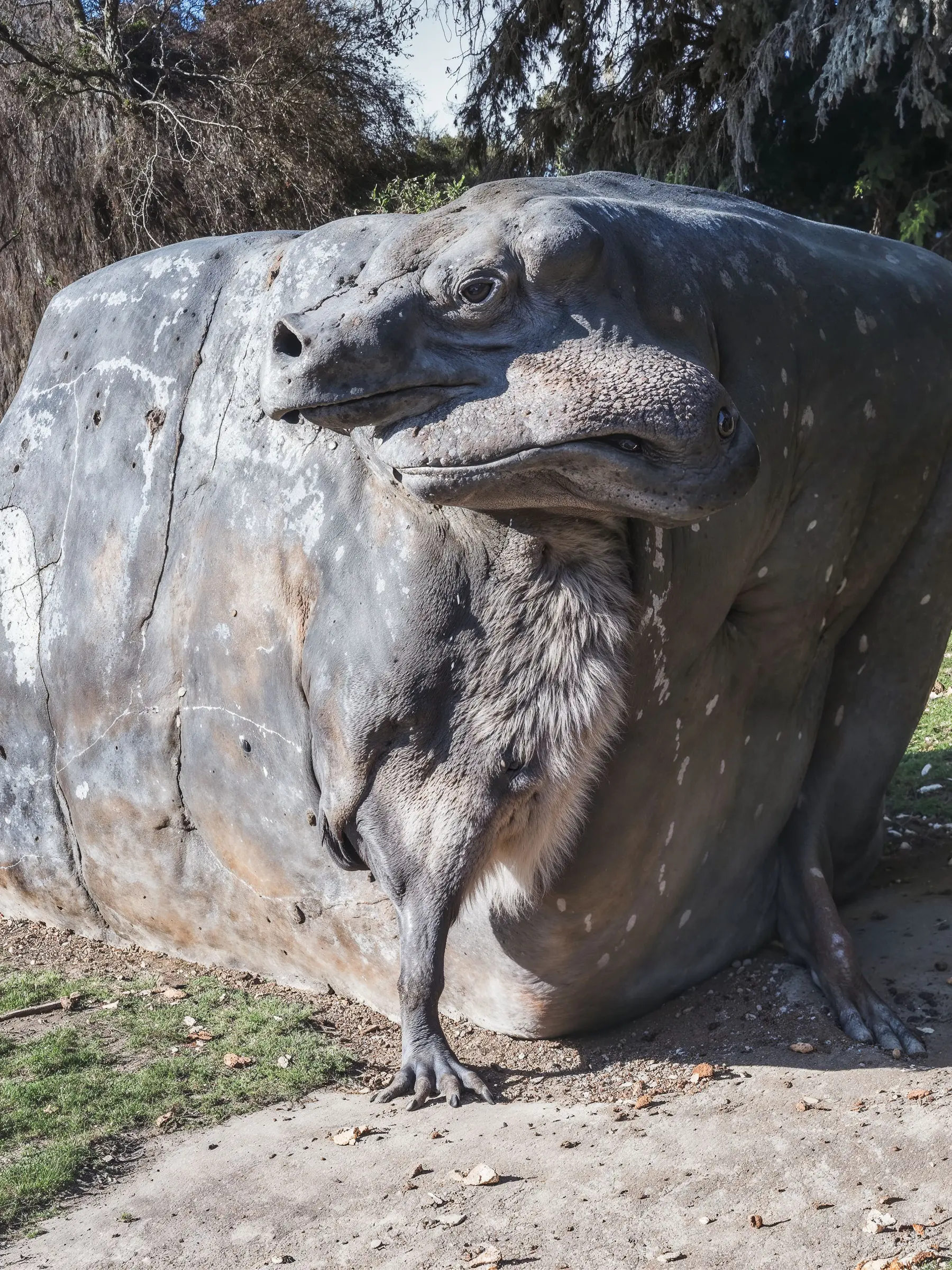
"a strange creature"
drag to reveal
03The Second Device
In collaboration with mouvement.studio
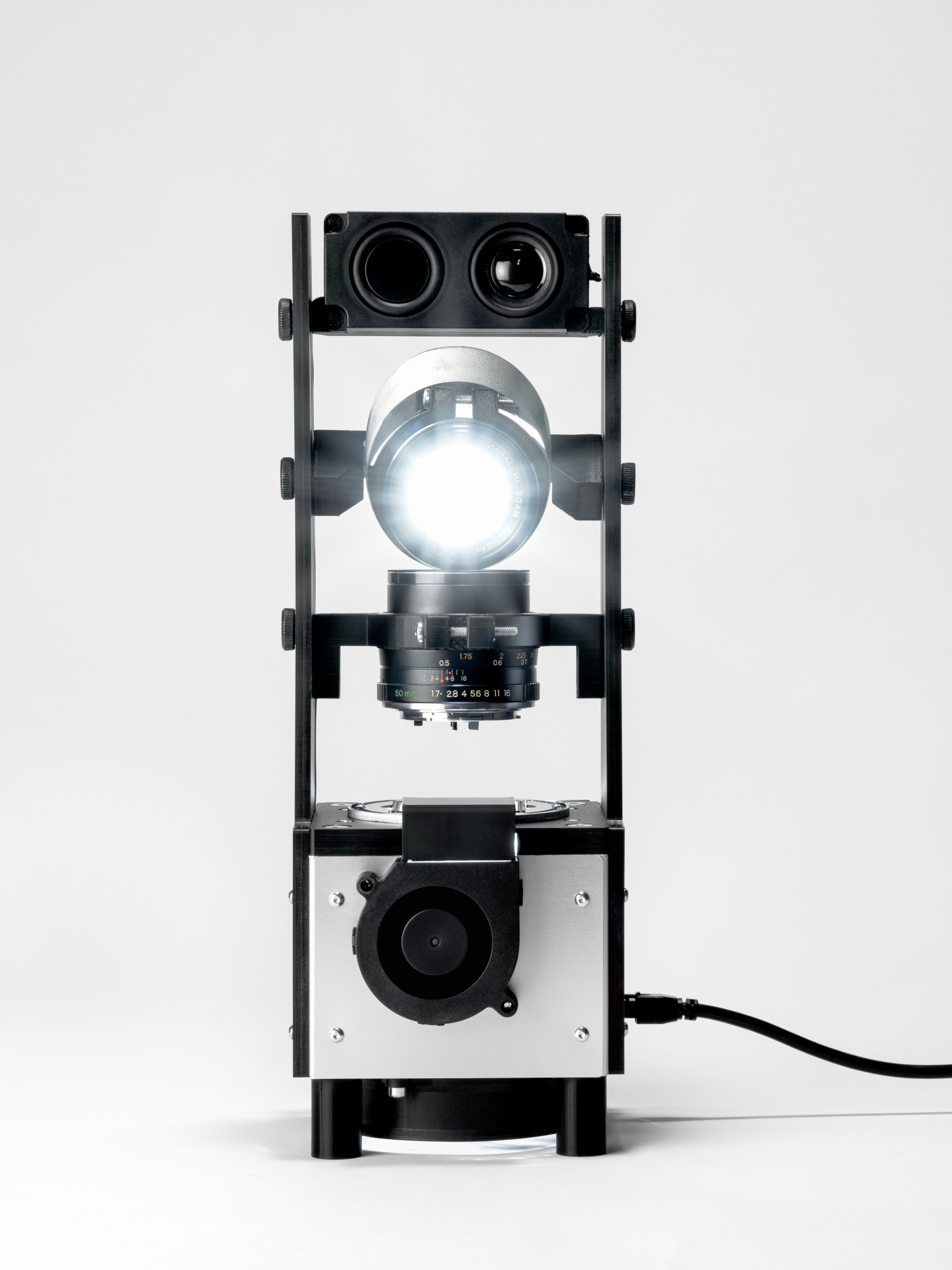
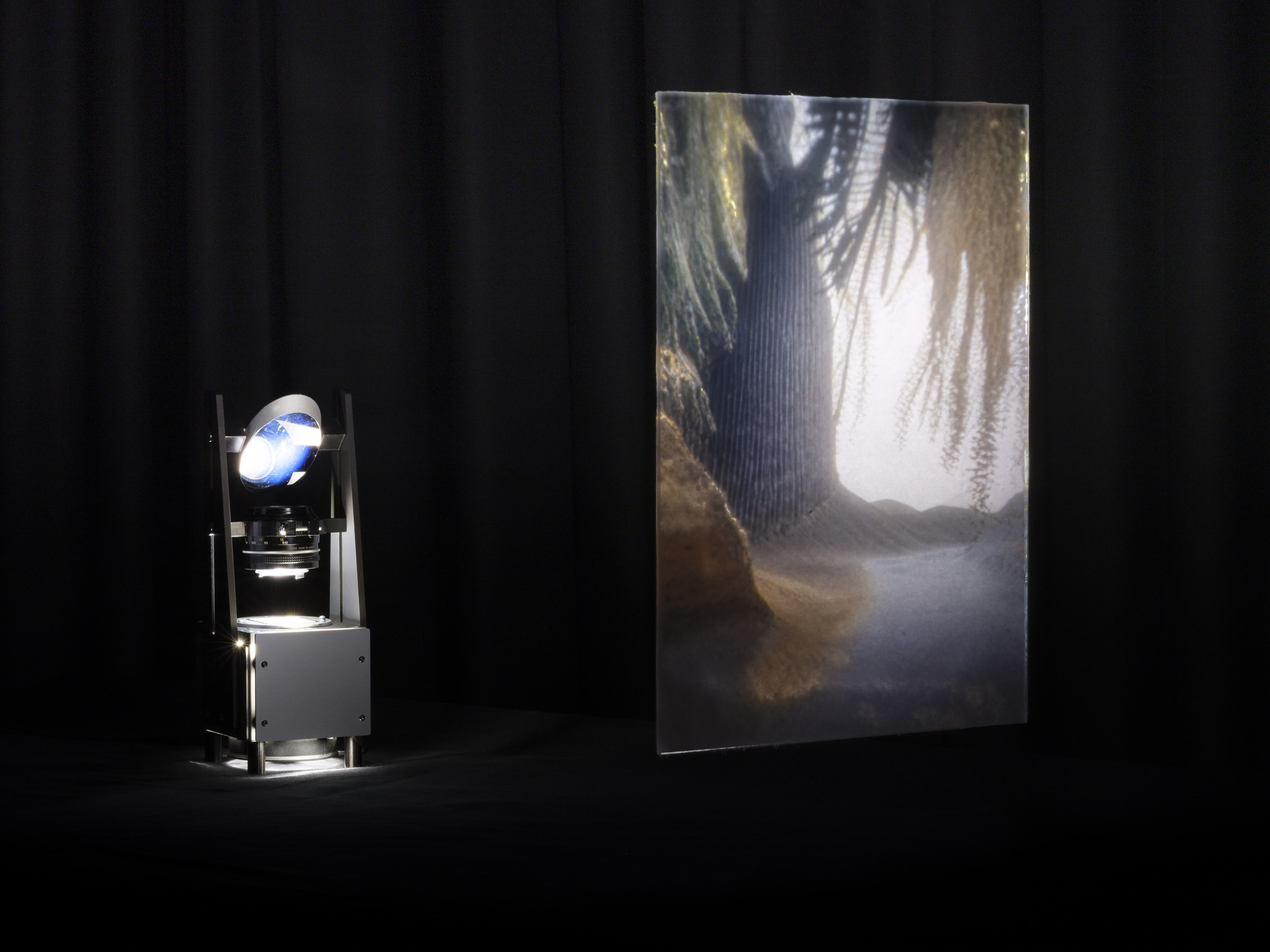
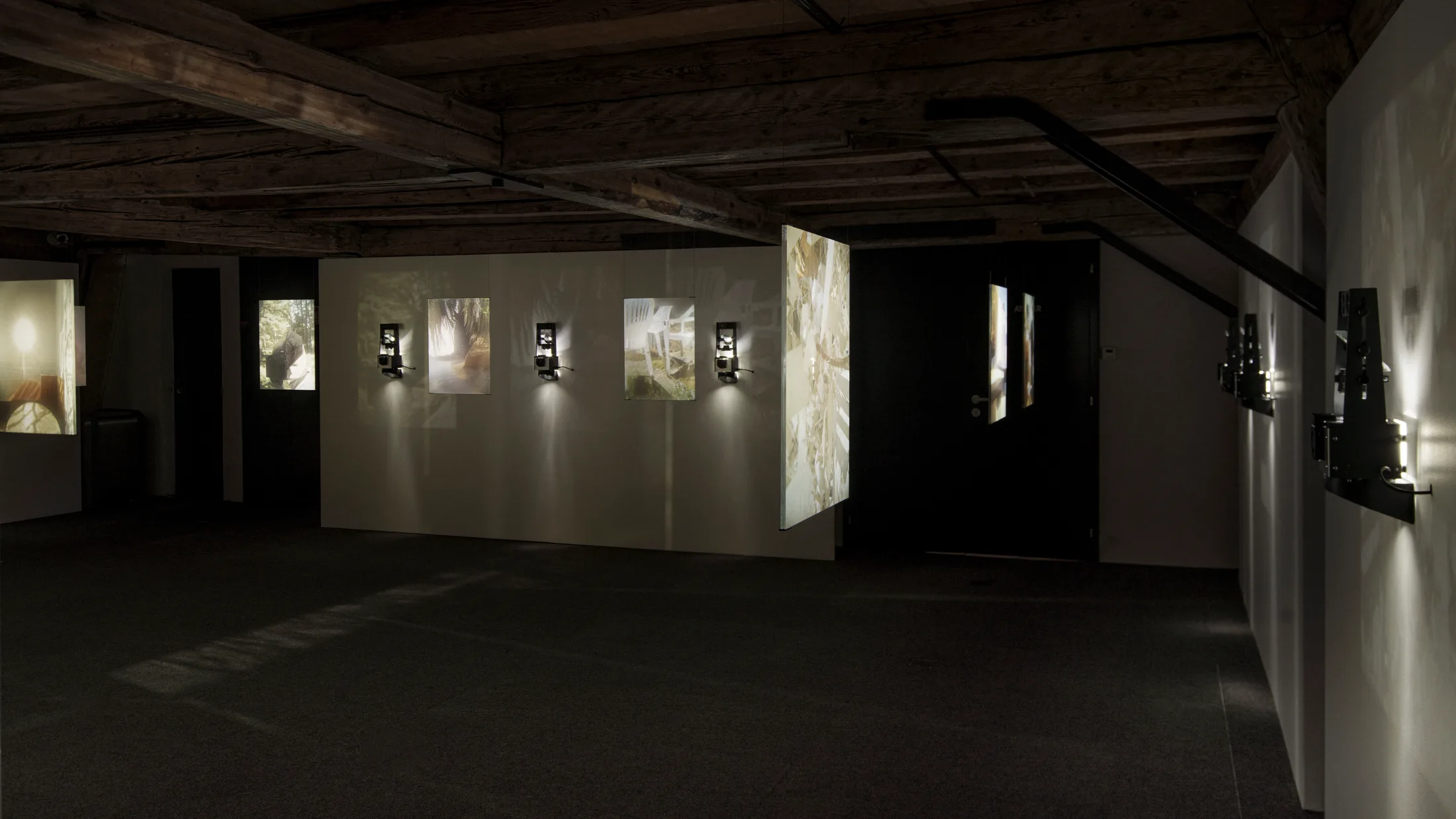
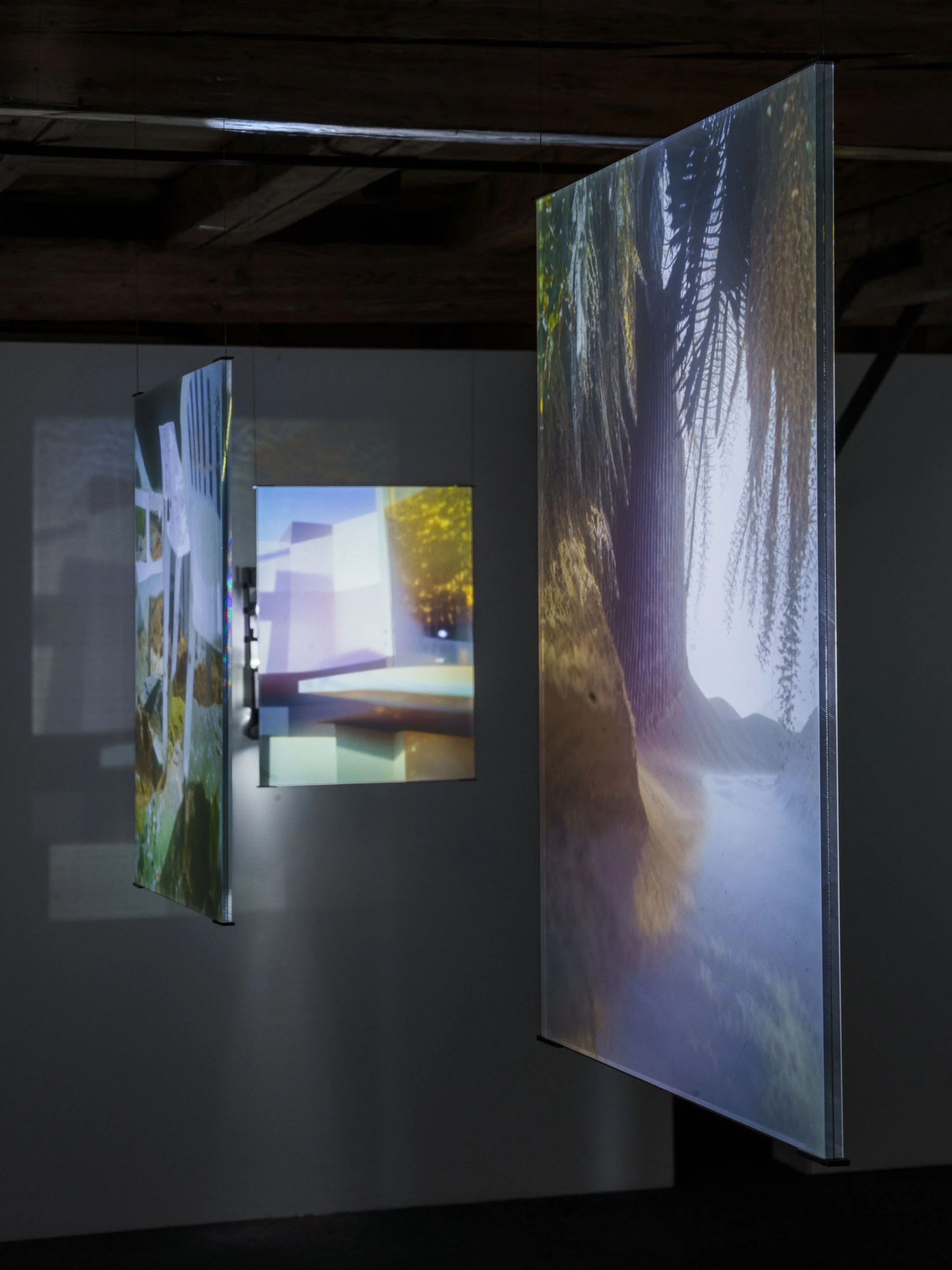
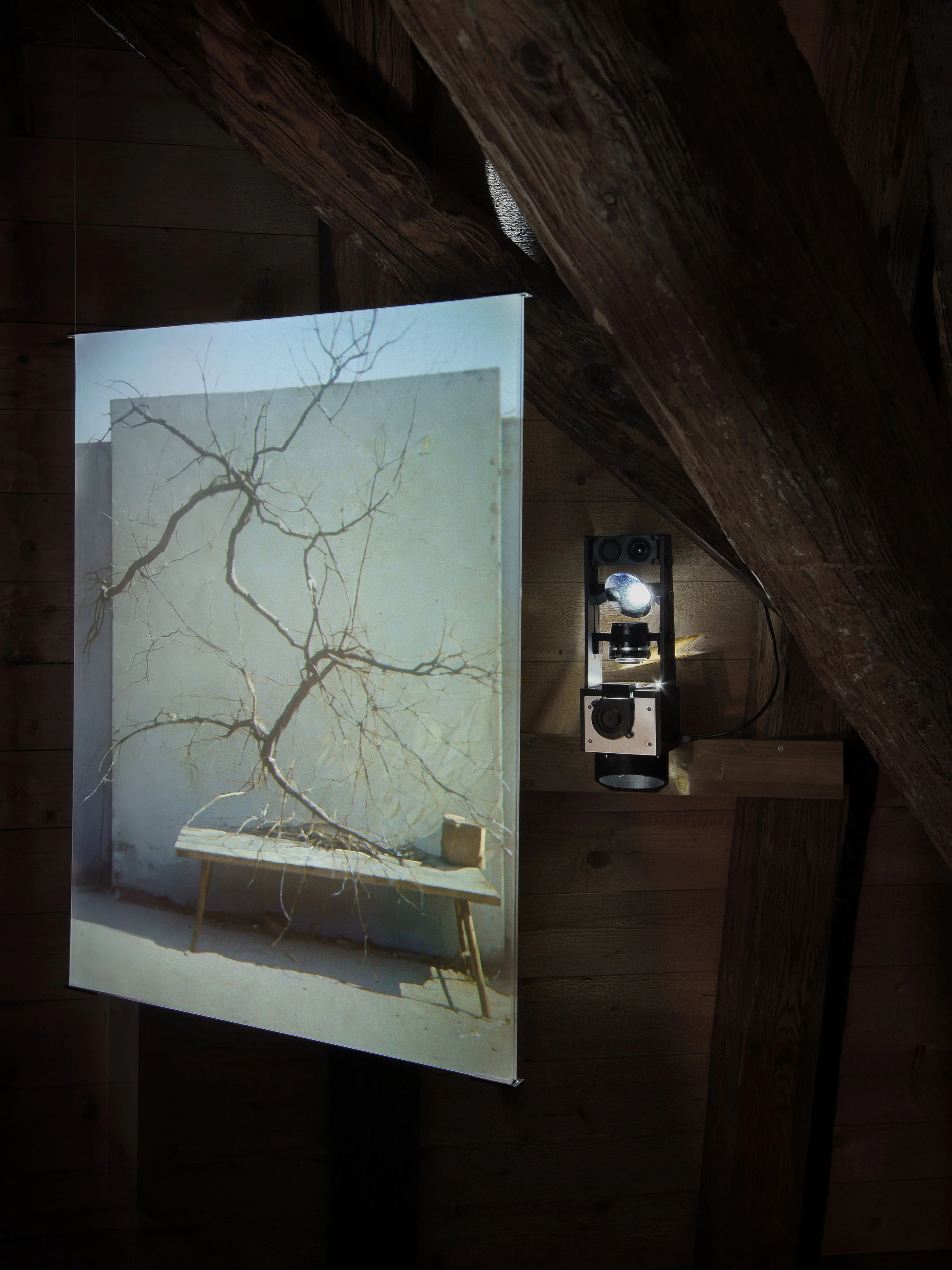
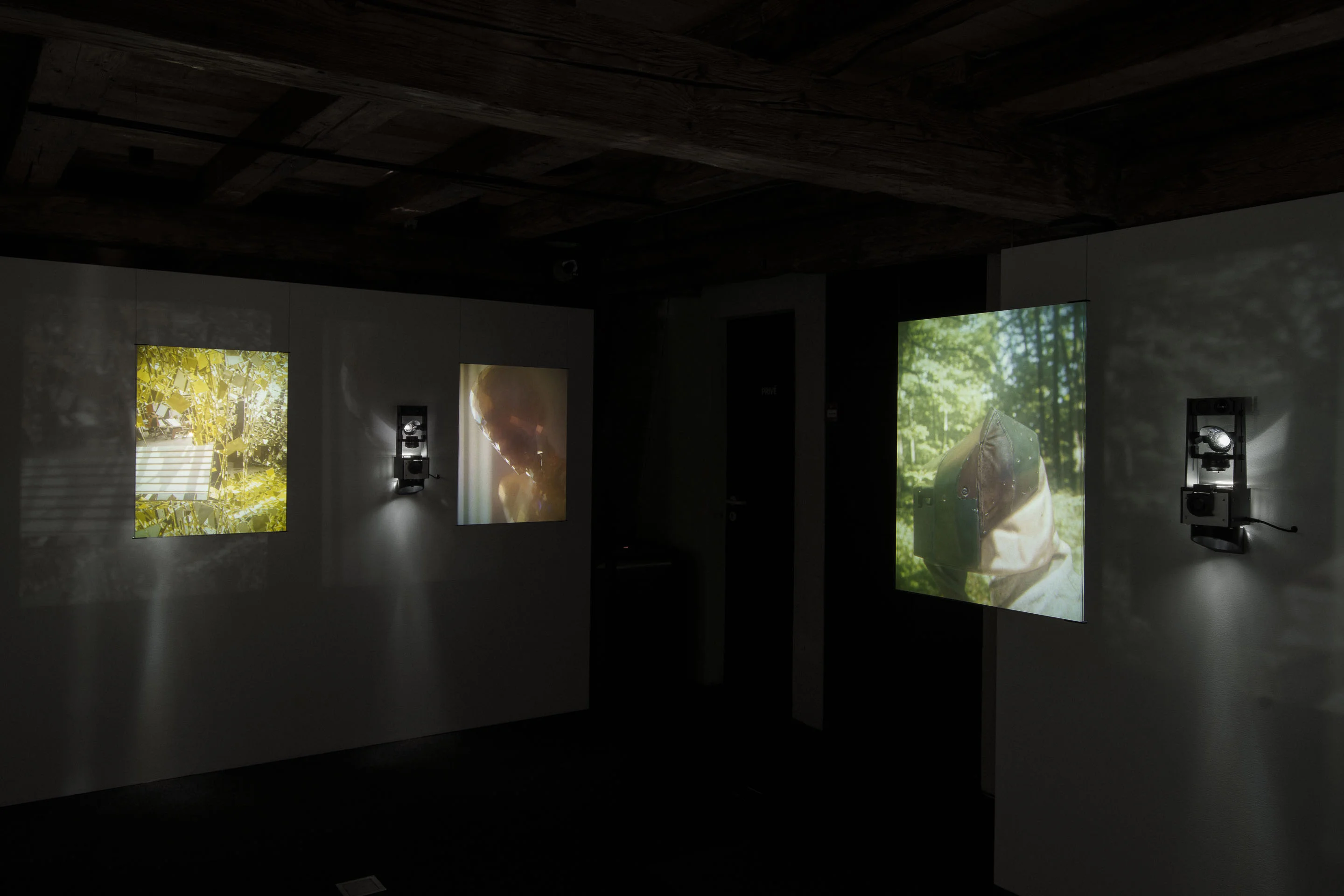
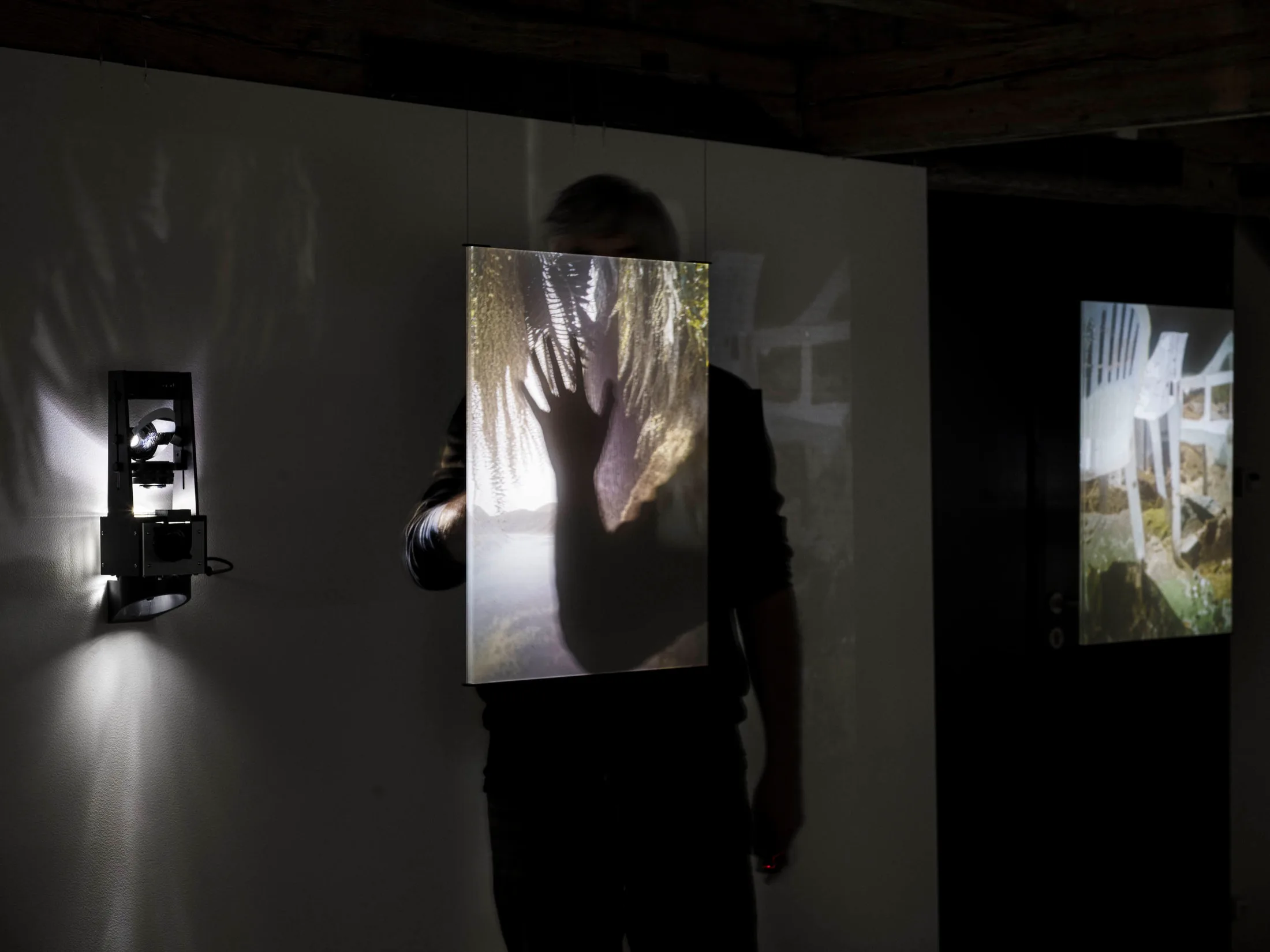
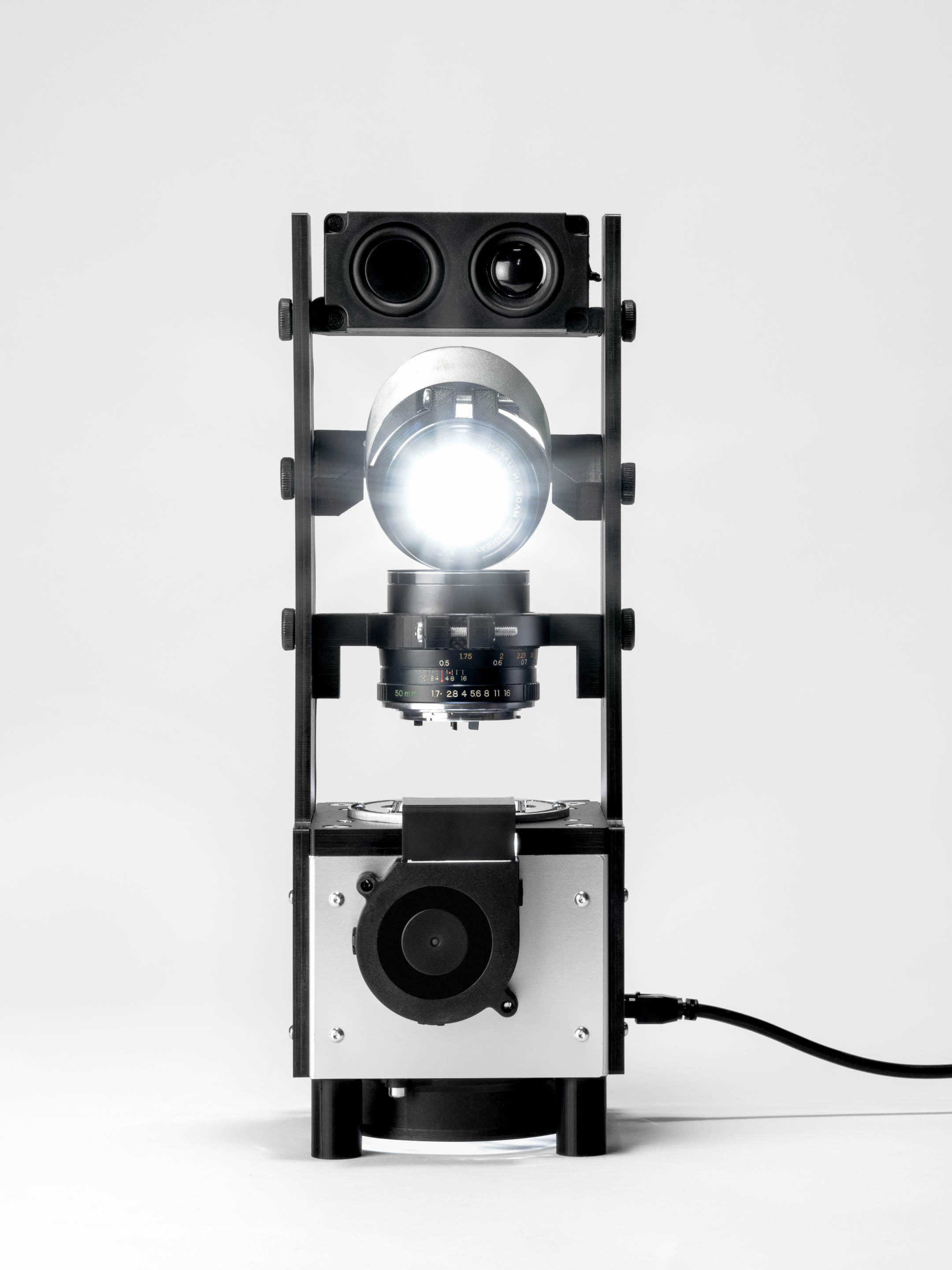
Alongside the AI camera, the project incorporates a second instrument: a magic lantern, rebuilt and adapted for the exhibition. Where the camera captures and transforms through spoken language, the lantern projects the AI-generated images through slides and onto suspended translucent panels.
The slides are produced through analog photographic processes. The lenses are drawn from the Camera Museum Vevey's own collection: elements that once served to capture the world, now repurposed to project a world spoken rather than seen.
The lantern is deliberately open: its internal tiers are separated by empty space, each layer visible. It is an invitation to witness the magic of light passing back through a slide toward the projection surface: the same light that once travelled the other way, through a lens, at the moment of capture. A journey of light, reversed and made visible.
Each lantern is also equipped with a speaker, which pronounces aloud the murmurs that generated the images: the voice prompts, heard in the space as the light falls. When the lanterns go dark, the voices stop.
04The Series
The images produced with Les Murmures stand in deliberate contrast to the photorealistic tendency of most AI tools. Rather than pursuing technical resolution or visual spectacle, these photographs pursue imprecision, romantic landscape, and the visual residue of language: what does an image look like when it is described and captured at the same time? Each title is the voice prompt that generated it. The caption is the origin. The image is its echo. The current exhibition presents 12 photographs.
bright sun
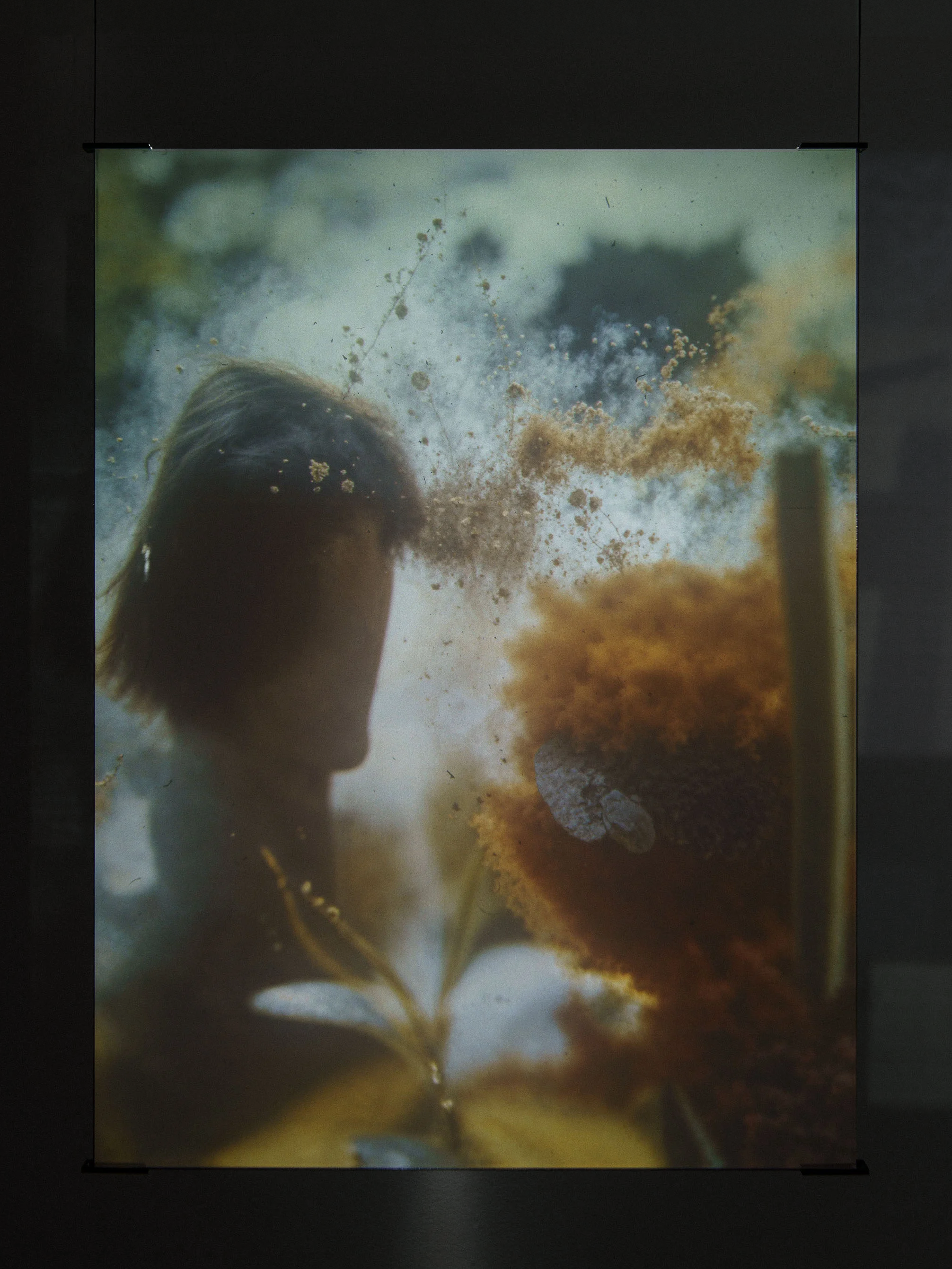
we are all delicate plants turning into smoke
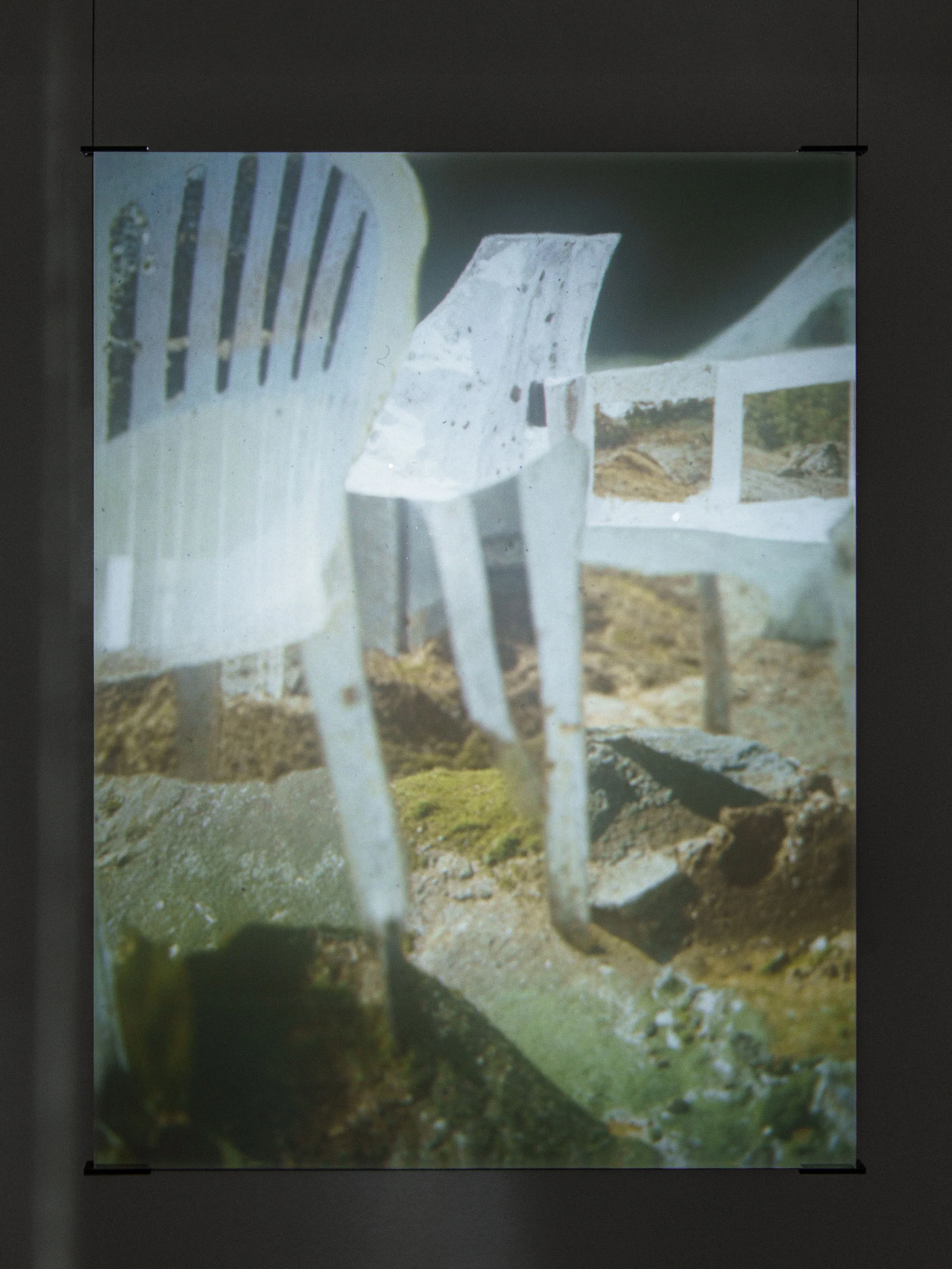
the remains of a large family reunion
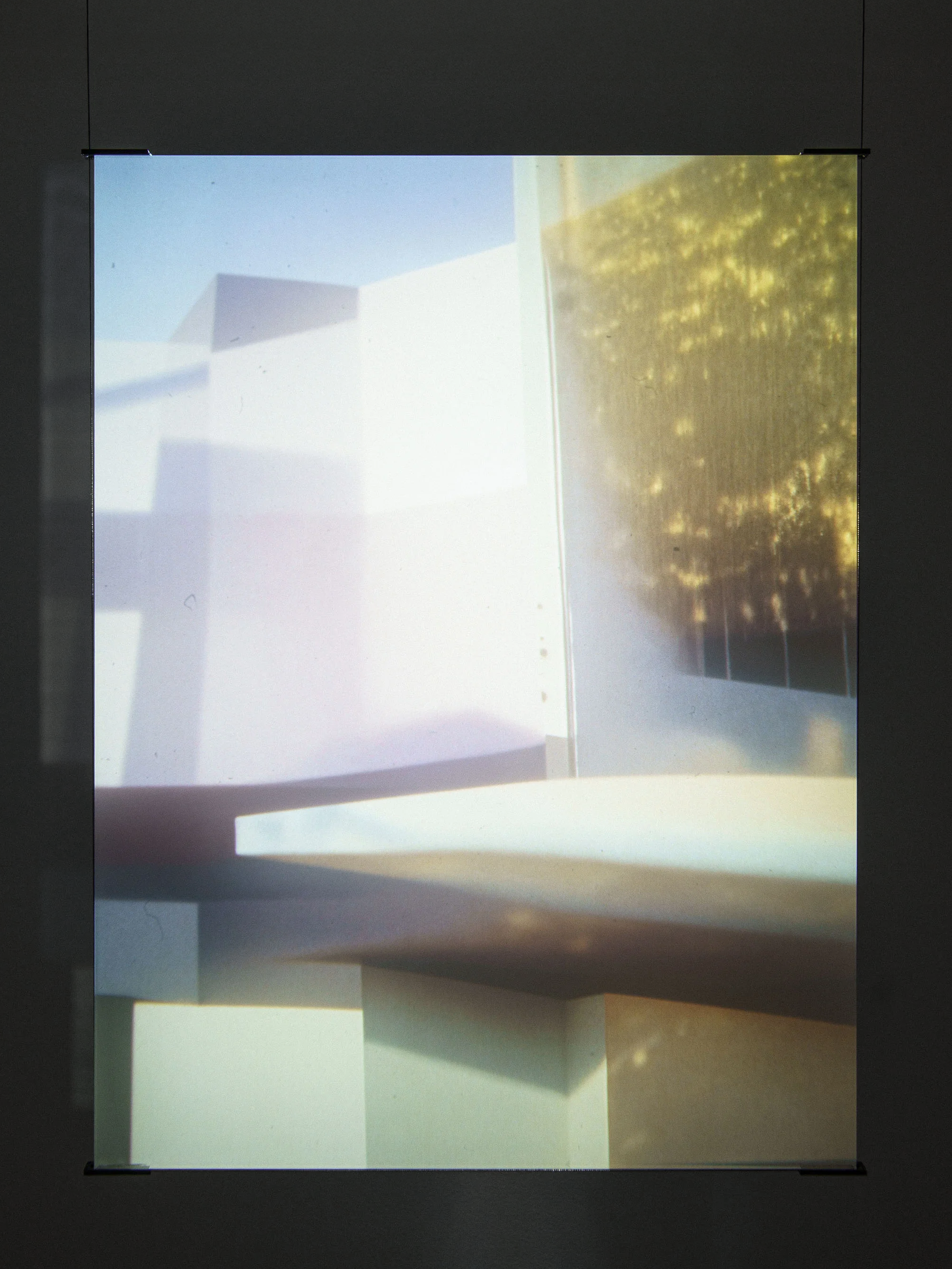
life arranged in geometric shapes
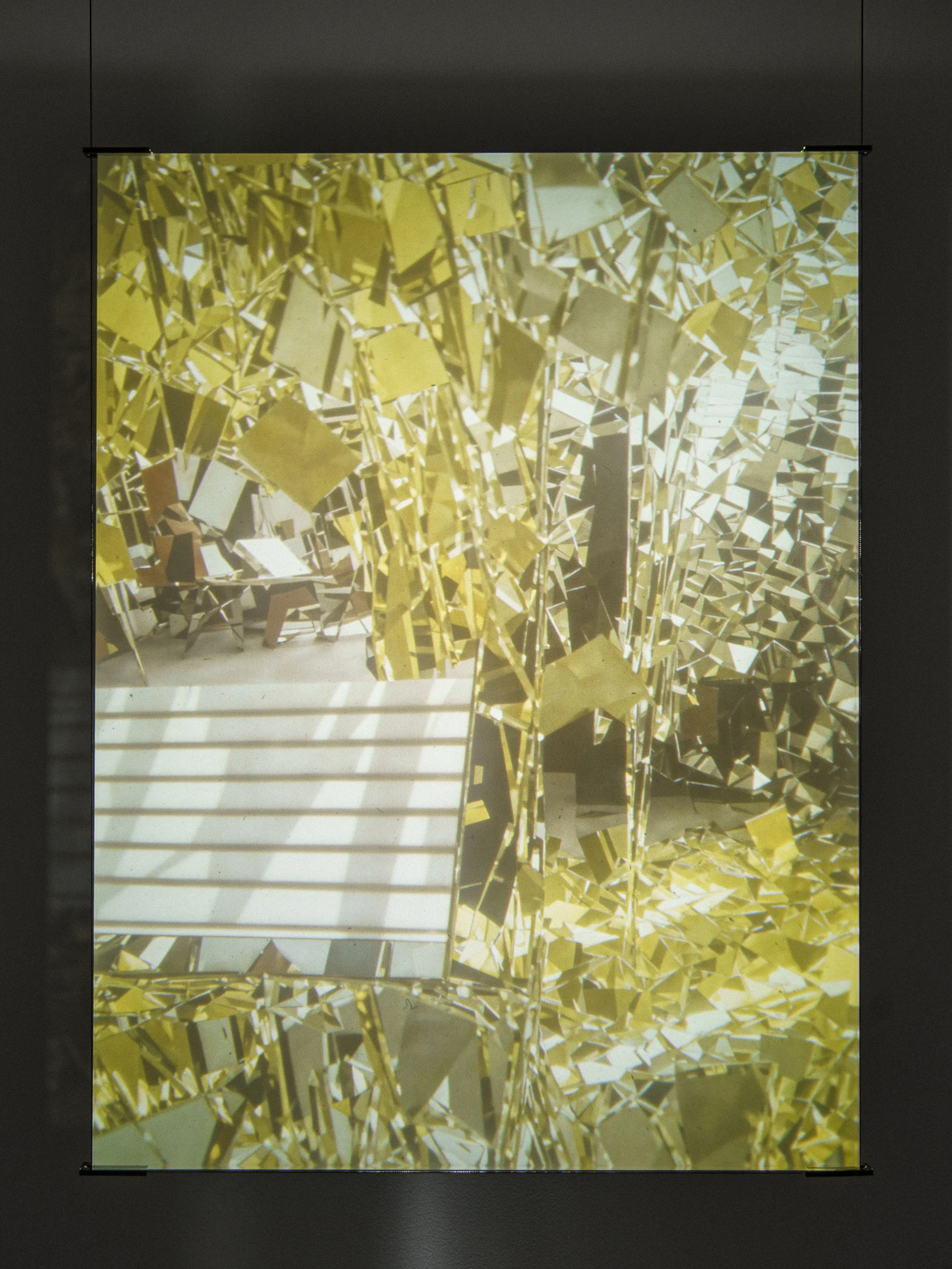
and everything else is mirrors too
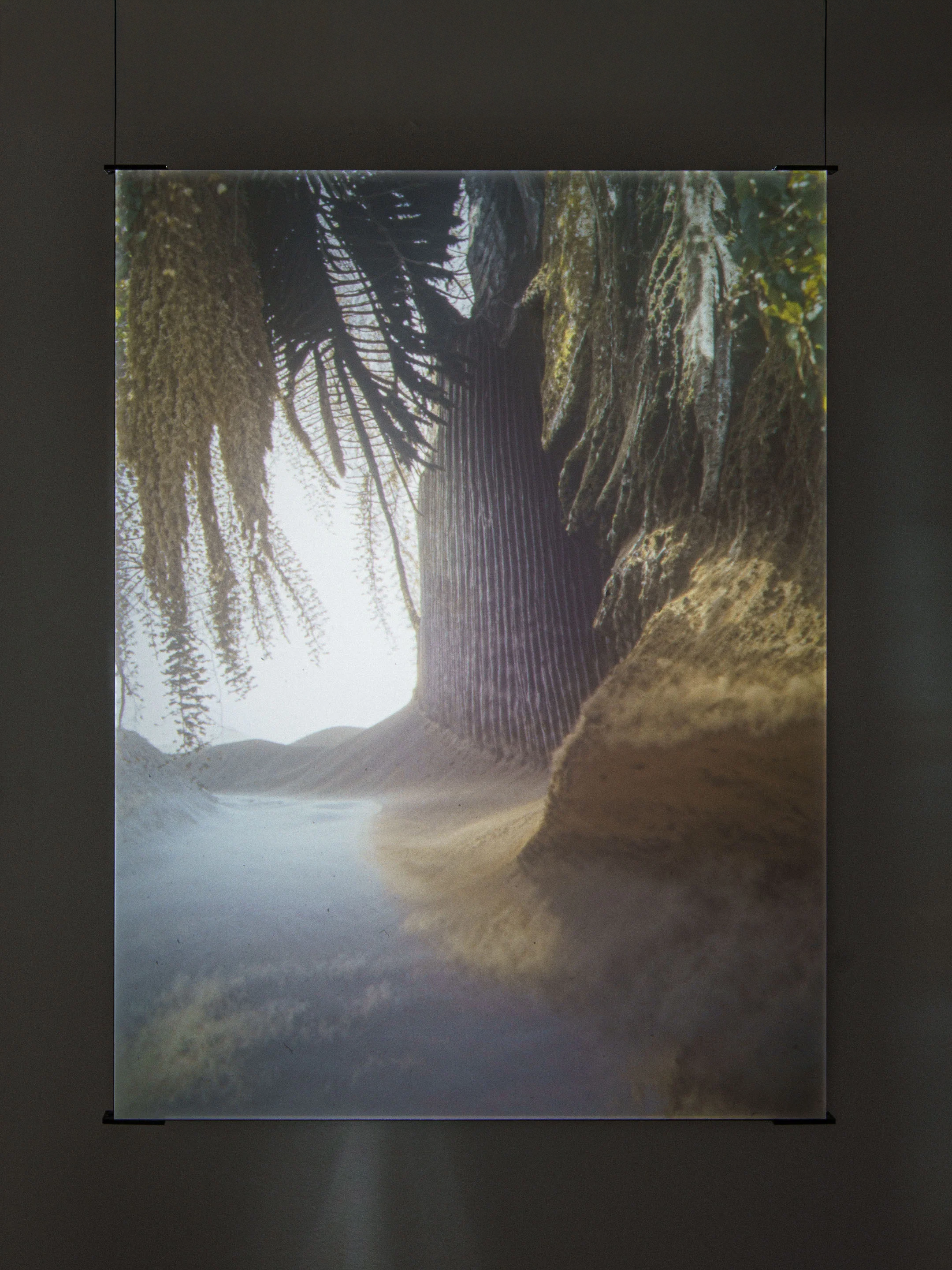
images falling apart like sand castles
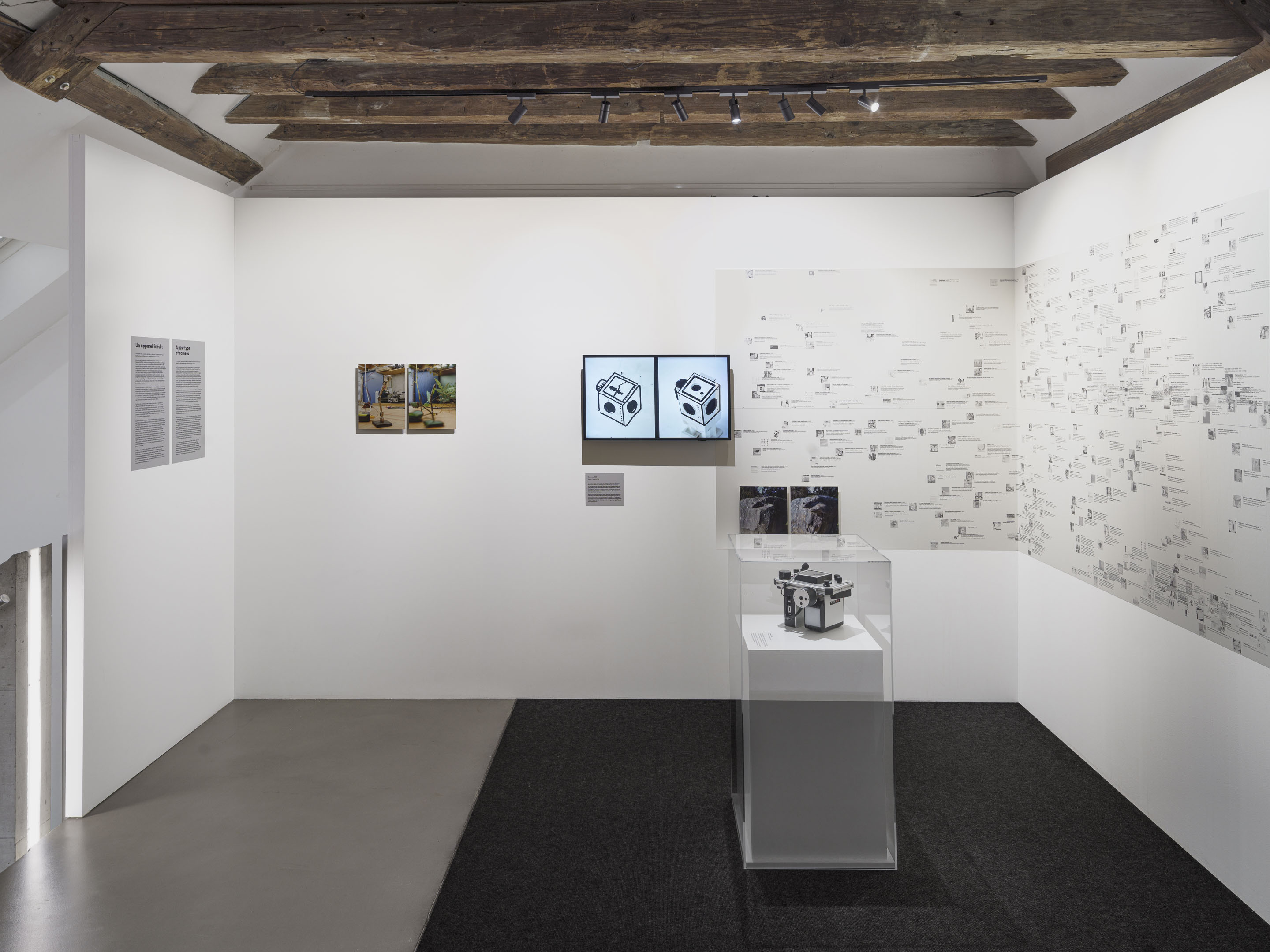
Exhibition views, Camera Museum Vevey, 2026
05In the Field
The Interface
The screen visible through the viewfinder is not incidental. It was designed to echo the visual language of digital cameras: exposure values, recording indicators, the square format borrowed from certain analog cameras. Familiar enough to feel like a camera. Foreign enough to remember that it is something else.
Each display element serves the specific logic of the project: murmur feedback, a recording indicator, the live view that shows what the device is currently seeing and transforming. The interface is a score.
The interface was designed by mouvement.studio, who brought both rigorous UX and a sensitivity to the project's poetic ambitions.
Building Les Murmures meant learning a new physical practice: walking through landscapes and urban spaces, speaking quietly to a machine in public. Describing a wall's texture, a particular quality of afternoon light, the way smoke moves when it forgets to hurry. As always, the instrument dictates a particular physicality.
There were absurd days: "not that sky, the other sky, the sky after rain" and moments of unexpected grace. The device occasionally misheard, confusing "shadows" with "numbers," "textures" with "temperatures." These mistranslations became part of the method.
The workflow runs on a compact local computing unit carried in the camera housing: voice recognition, prompt construction, and real-time diffusion inference, all happening within a second of speech. The camera is not a filter applied after the fact. It is a way of seeing, in real time, through language.
06From the Archive
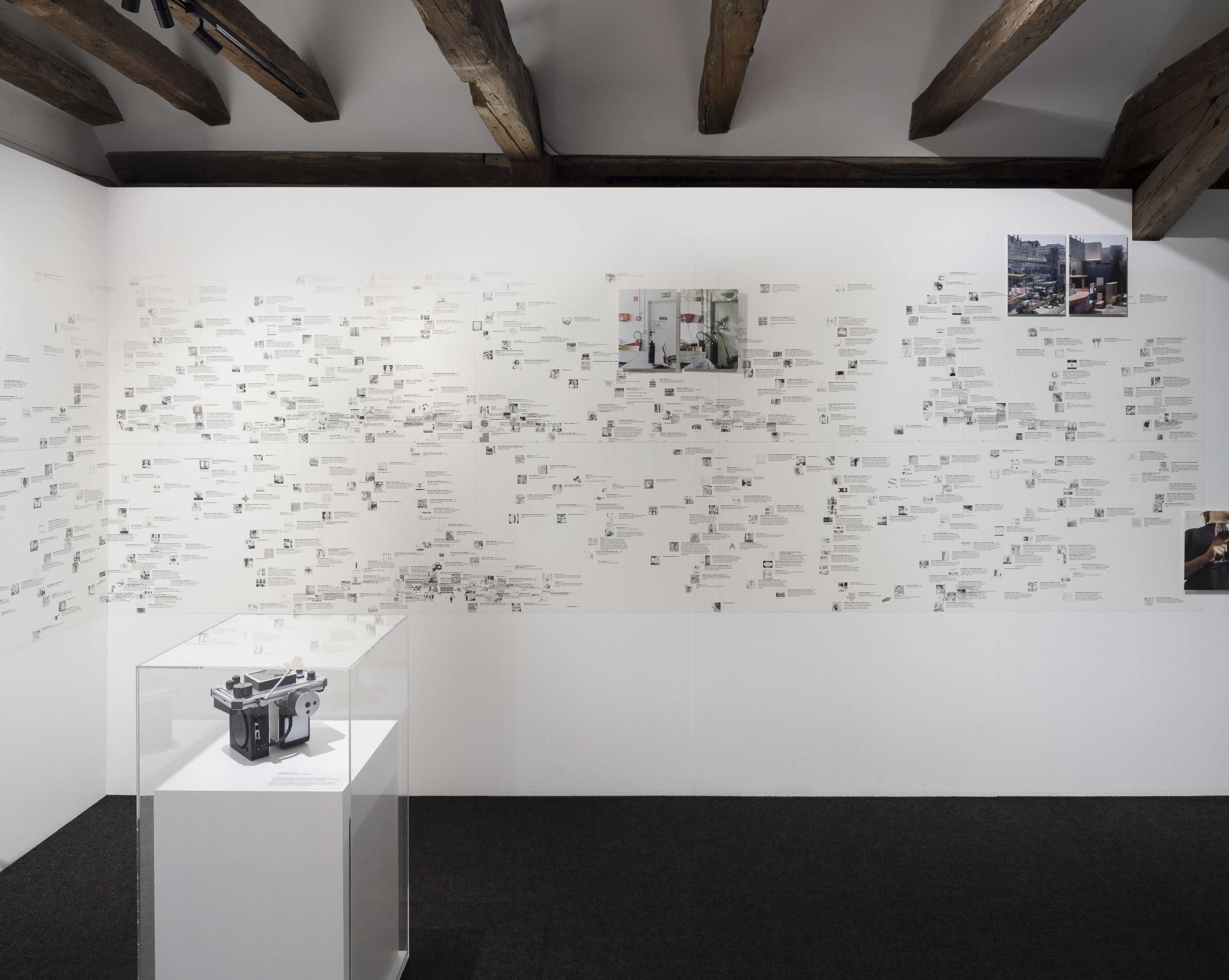
The complete project documentation (notes, working texts, process records, images) was ingested by AI to generate further derivative works. Two examples of what emerges:
An interactive timeline vibe-coded by AI from the artist's working notes.
AI Camera07Context
Les Murmures is a commission from the Camera Museum Vevey, Switzerland, where it is currently exhibited. Opening: March 2026. One of Europe's foremost institutions dedicated to the history and culture of photography, a fitting host for a work that takes the camera itself as its medium of inquiry.
The photographs are presented as retroprojections on plexiglass, 56 × 42 cm.
This project continues a sustained investigation into AI collaboration begun in 2022. Previous works include:
More works at matbr.com ↗
08Perspectives
Next Project · 2027
Hyper-mer is a group exhibition commissioned by the Centre Photographique Rouen Normandie, and conceived by Raphaëlle Stopin with philosopher Olivier Remaud as scientific advisor. Eight artists, a shared thematic territory, and a production period running through 2025 and 2026.
The title borrows from paleontology: the "hyper-mer," a sea that persists beyond its own liquidity, embedded in rock, lichen, and geological time. From maritime and lacustrine spaces to mountain spaces. The sea within them.
Mathieu Bernard-Reymond's contribution will use a new version of the AI camera as its instrument, extending the whispered image-making practice of Les Murmures into this territory of vastitude and deep time.
The Camera
A third version of the camera is in development, built on a different architecture with faster inference, significantly lower power consumption, and a more compact form.
09Support
The development of a new camera, the production of images, and the translation of a practice into exhibition form: Les Murmures exists because institutions and individuals chose to accompany it. What comes next requires new funding.
This is independent research into what it means to "remain a photographer" in the age of generative AI: to appropriate these tools not as a technologist or a prompt engineer, but as someone who still frames, still chooses, still stands in a place and decides to look. To keep the photographer's gestures, the photographer's attention, while the image itself becomes something stranger. It sits at the intersection of generative AI, photography, and performance. The questions it raises are not going away. Neither is the practice.
If you are a foundation, an institution, or a private collector interested in supporting the next phase of this work, we welcome the conversation.
Get in touch ↗In collaboration with
Interaction design, interface thinking, prototyping, and the physical design of the devices were developed in close collaboration with Mouvement Studio.
 mouvement.studio ↗